
Leave Your Message
In the modern manufacturing landscape, particularly within the aerospace, automotive, and medical device sectors, the demand for precision has reached unprecedented levels. Precision screw thread gauging is no longer just about ensuring a nut fits a bolt; it is about guaranteeing the structural integrity of high-pressure valves, the reliability of orthopedic implants, and the performance of aerospace fasteners. To achieve this, industrial lenses have become the cornerstone of non-contact metrology systems.
Traditional mechanical gauges, such as plug and ring gauges, are subject to wear and tear, and their accuracy is often limited by human operator variability. Industrial lenses, especially telecentric variants, allow for high-speed, repeatable, and micron-level measurements without ever touching the part. This eliminates the risk of cross-threading or damaging delicate finishes.
The global shift toward Industry 4.0 has accelerated the adoption of automated optical inspection (AOI) systems. Today’s industrial lenses are integrated with high-resolution CMOS sensors and AI-driven software to provide real-time feedback on production lines. This allows manufacturers to detect deviations in thread pitch, crest diameter, and flank angle instantaneously, reducing scrap rates and optimizing production efficiency.
As electronic devices like smartphones and wearables become smaller, the screws holding them together have shrunk to microscopic sizes. Gauging threads on an M1.0 screw requires extreme magnification and a massive depth of field. Bi-telecentric lenses are uniquely suited for this, as they maintain constant magnification even if the screw is slightly displaced along the optical axis, ensuring that the measured diameter remains accurate.
In the automotive industry, engine and transmission bolts are subjected to extreme stress. Thread gauging must ensure that the thread geometry is perfect to prevent loosening under vibration. High-resolution industrial lenses can capture the entire profile of a large bolt in a single frame, analyzing hundreds of data points along the thread flank to identify minute defects that a manual gauge would miss.
Bone screws and dental implants require biocompatible materials and precise threading to ensure proper osseointegration. The "no-fail" nature of these products demands 100% inspection. Industrial lenses equipped with specialized coatings and high transmission performance allow for the inspection of reflective titanium surfaces without the interference of glare or "blooming" effects.
The industrial lens market is currently witnessing several transformative trends that are reshaping the precision screw thread gauging industry:
Lenses are now being designed with AI algorithms in mind, optimizing light throughput and contrast to make it easier for machine learning models to identify thread defects automatically.
The integration of liquid lenses allows for ultra-fast autofocusing, enabling a single inspection station to gauge screws of varying lengths and sizes without moving the camera assembly.
Beyond visible light, UV and IR imaging are being explored to detect subsurface cracks or material inconsistencies in the thread roots that are invisible to the naked eye.
The future of thread gauging lies in computational imaging, where the lens and the software work in a closed loop to reconstruct 3D models of threads from 2D images. This will allow for the measurement of internal threads with the same ease as external threads, a challenge that has historically been difficult for optical systems.
"Our objective is to produce a top-level lens and become one of the leaders in telecentric technology. From manufacturing to creation, we are on the way."
Canrill Optics, established in 2009, is the first one to focus on the manufacturing & marketing of telecentric lens and telecentric lens design in China, and the only one to build the complete supply chain with our own mechanical factory and optical factory in industry lens all over the world.
Over the years, as a custom lens manufacturer, Canrill lens has been upgraded four generations with advanced technology and performance, earned the trust from worldwide clients, and have successfully made cooperation with world-famous brands, like Samsung, Apple, LG, Huawei, Han’s Laser, TSMC, etc.

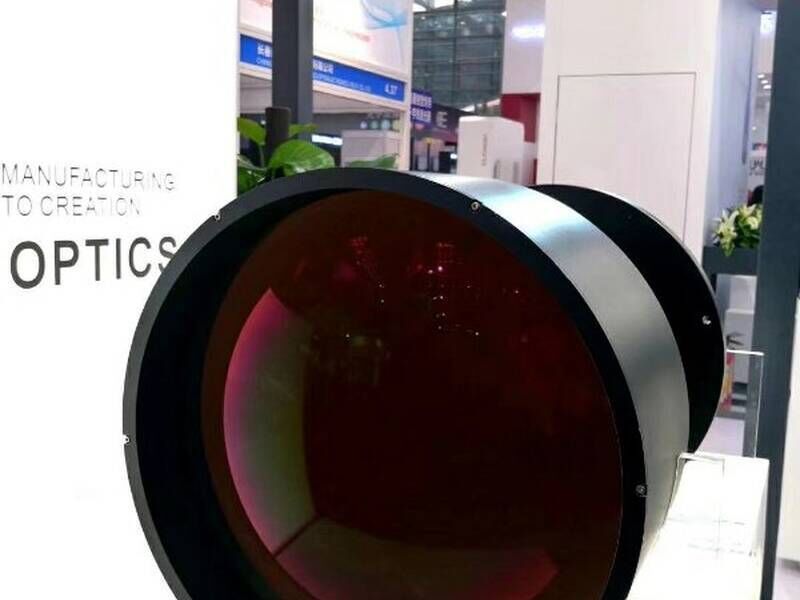
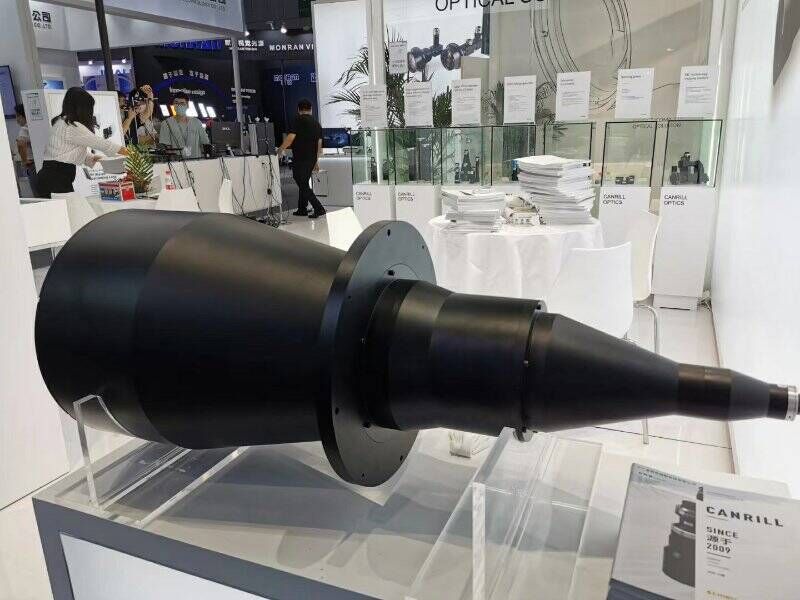

Since founding Canrill in 2009, Simon has been focused on building the worlding leading manufacturer of telecentric lenses. Under Simon's leadership, Canrill has grown into a 100+ person company which is renowned in both China and overseas.

Senior optical designer, with 10+ years' experience in the design and inspection of telecentric lens and lights, driving the innovation behind our precision thread gauging solutions.

15+ years' experience in mechanical design. Ensuring the structural integrity and precision of every industrial lens housing produced in our factory.
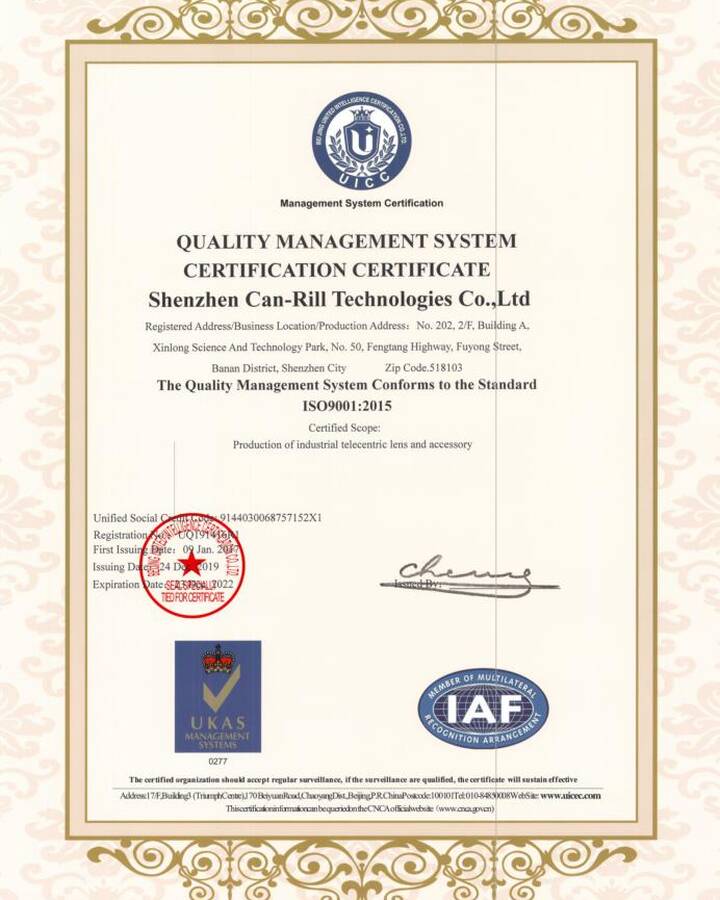
ISO 9001
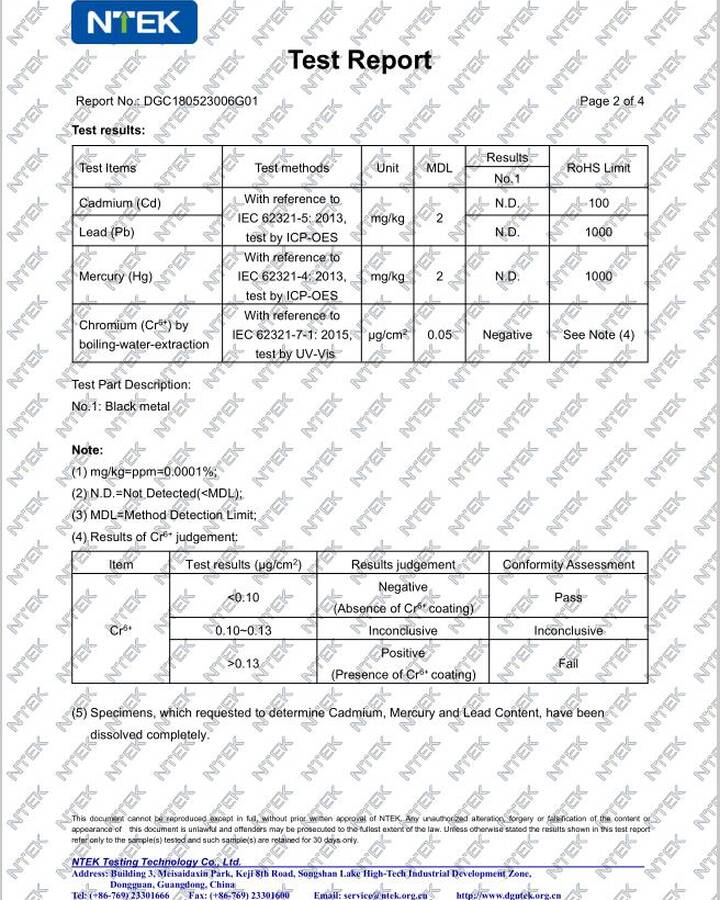
RoHS Cert 1
RoHS Cert 2
RoHS Cert 3
 10MDT Series Bi-Telecentric Lenses for 1.1 Inch Sensors
 China MH Series Lenses: Low Distortion Performance
 5MDT Series Bi-Telecentric Lenses for 2/3 Inch Sensors
10MDT Series Bi-Telecentric Lenses for 1.1' Sensors
MDT Series: Precision Thread Gauging Lenses
High-Resolution Bi-Telecentric Lenses
5MDT Series Bi-Telecentric Lenses for 2/3 Sensors
China 5MDT Series Lenses for Semiconductor Inspection